Introduction
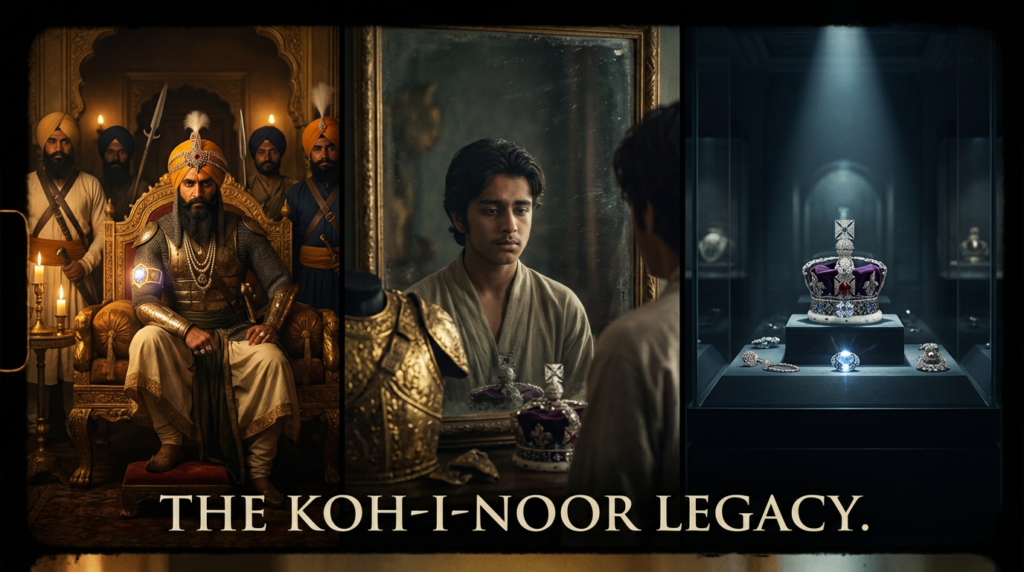
The Kohinoor Diamond is more than just a 105-carat gemstone; for every Sikh, it is a symbol of the lost glory of the Sikh Empire. Once the pride of the Khalsa Raj, its journey from the armlet of Maharaja Ranjit Singh to the British Crown Jewels is a tale of betrayal, pain, and the tragic life of a child king.
The Pride of the Lion of Punjab
Maharaja Ranjit Singh, the ‘Lion of Punjab’, acquired the Kohinoor in 1813 from Shah Shujah Durrani. He didn’t just see it as jewelry; he saw it as a symbol of sovereignty. During his reign, the diamond stayed in Lahore, representing the unmatched power of the Sikh Empire. It is said that the Maharaja wanted to donate the diamond to the Jagannath Puri Temple before his death, but history had other plans.
The Betrayal of 1849
After the death of Maharaja Ranjit Singh, the Sikh Empire faced internal treachery and British aggression. In 1849, after the Second Anglo-Sikh War, the British forced the young Maharaja Duleep Singh—who was only 10 years old—to sign the Treaty of Lahore.
Article III of the Treaty stated:
“The gem called the Koh-i-Noor, which was surrendered by Shah Shuja-ul-Mulk to Maharaja Ranjit Singh, shall be surrendered by the Maharaja of Lahore to the Queen of England.”
The Tragedy of Maharaja Duleep Singh
The most painful part of this history is the fate of the last Sikh Maharaja. Separated from his mother, Maharani Jindan, and taken to England, the young boy was forced to convert to Christianity. In a staged event in London, Duleep Singh was made to “voluntarily” present the Kohinoor to Queen Victoria. Imagine the pain of a child handing over his father’s legacy to those who took his kingdom.
Where is the Kohinoor Now?
Today, the Kohinoor sits in the Tower of London as part of the British Crown Jewels. While India, Pakistan, and the Sikh community have repeatedly asked for its return, it remains a “trophy of war.” For the Sikh diaspora in the USA, Canada, and beyond, the Kohinoor is a reminder of a time when the Khalsa flag flew high from Lahore to Jamrud.