
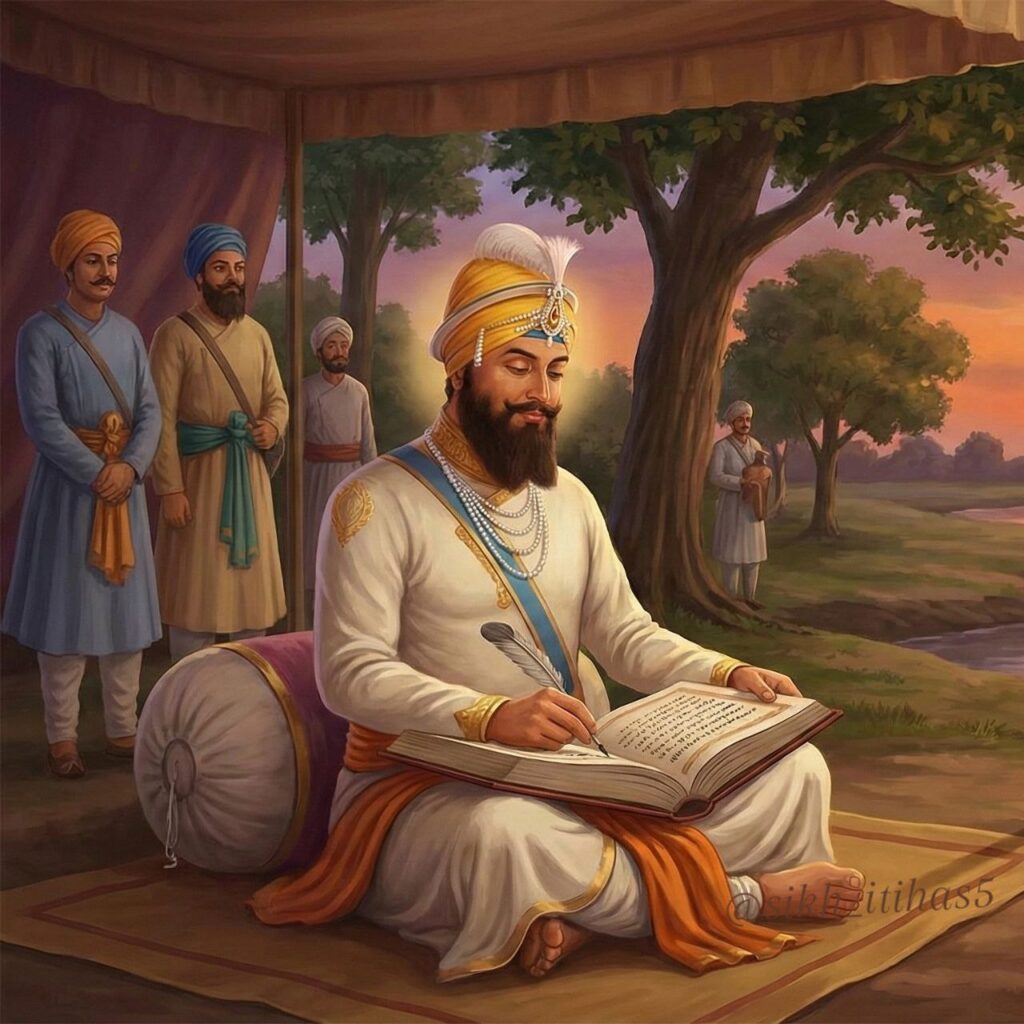
The Zafarnama: 20 Divine Teachings of Guru Gobind Singh Ji to Aurangzeb
The Zafarnama is not just a letter; it is a profound moral indictment and a spiritual masterpiece written by the Tenth Master, Dhan Dhan Sri Guru Gobind Singh Ji. Composed in Persian during one of the most challenging periods of Sikh history, it was sent to Emperor Aurangzeb to hold him accountable for his broken promises and tyranny.
Among the many verses, there are 20 core teachings and statements that Guru Sahib presented to the Emperor. These “Bachan” (words) remain a guiding light for humanity on ethics, bravery, and faith.
1. The Integrity of a True Man
Guru Sahib emphasized that the greatest quality of a noble person is being a “Man of his Word.” He stated that a man who makes a promise and then retreats is not worthy of being called a man. True strength lies not in physical might, but in the alignment of one’s heart and tongue.
2. The Futility of False Oaths
Aurangzeb had sworn on the Holy Quran to provide safe passage to the Sikhs leaving Anandpur Sahib, a promise he later broke. Guru Ji pointed out that those who take false oaths in the name of God eventually face ruin. He warned that trusting someone who habitually lies under oath is equally dangerous.
3. The Righteousness of the Sword
Perhaps the most famous teaching from the Zafarnama is:
“Chukar az hama heel-te dar guzasht, Halal ast burdan ba shamsheer dast.” “When all other means have failed, it is righteous to draw the sword.” Guru Ji explained that while peace is always the priority, taking up arms against oppression is a moral necessity when dialogue and diplomacy are ignored by a tyrant.
4. Under the Protection of the Lion
Guru Sahib declared that when one seeks the shelter of the “Lion” (the Almighty), no “deer” or “jackal” (enemies) can cause them harm. He expressed absolute faith that even if millions were to rise against a servant of God, they could not touch a single hair on their head if the Creator willed their protection.
5. The Universal Light
The Guru reminded Aurangzeb that the same Divine Light resides in all—whether they are Hindu, Muslim, or from any other walk of life. To recognize God in everyone is the highest form of wisdom. He criticized Aurangzeb for claiming to be religious while causing pain to God’s children.
6. Hypocrisy of Rituals
Guru Ji taught that counting beads (Tasbi), reciting prayers, or building mosques is meaningless if one’s heart is filled with cruelty. Worship that does not lead to compassion is never accepted in the court of the Lord.
7. Trust in the Creator over Material Might
While Aurangzeb took pride in his massive armies, vast treasuries, and the throne of Delhi, Guru Gobind Singh Ji took pride in the protection of Akal Purkh (The Immortal One). He stated that worldly kingdoms are temporary, but the kingdom of God is eternal.
8. The Warning Against Tyranny
Guru Sahib cautioned the Emperor that a king who oppresses the poor and breaks his own religious laws can never be a true ruler. He reminded Aurangzeb that God is the “Nirvair” (without enmity) but also the punisher of those who commit injustice.
For more information watch the video belew