The Five K’s (Panj Kakar): The Spiritual Uniform of a Khalsa
In 1699, on the historic day of Vaisakhi, Guru Gobind Singh Ji created the Khalsa Panth. He gave the Khalsa a unique identity and a code of conduct, which included wearing five physical symbols known as the Five K’s or Panj Kakar. These are not just symbols but a commitment to a life of discipline and righteousness.
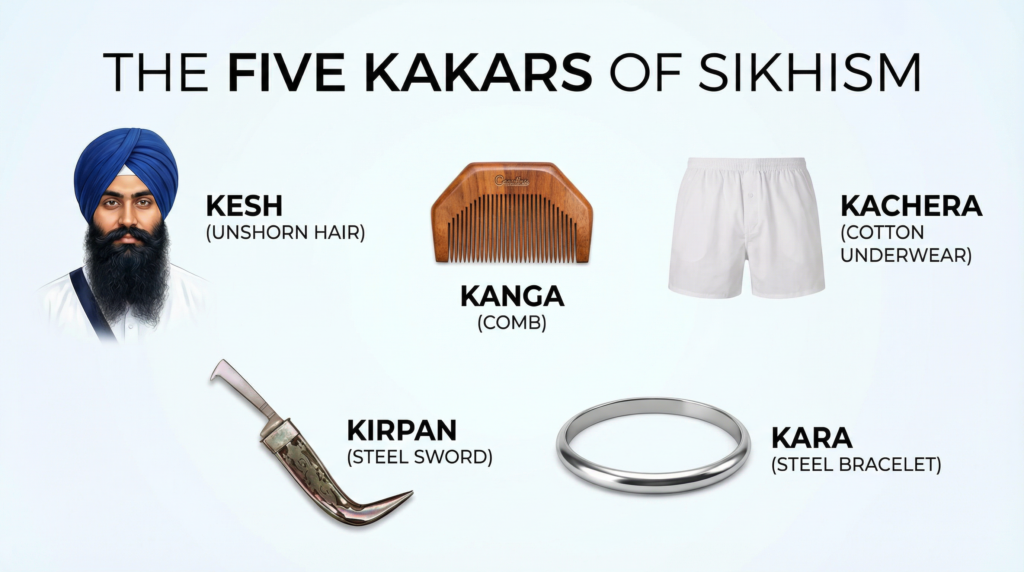
1. Kesh (Uncut Hair)
Kesh is the most visible symbol of a Sikh. It represents living in harmony with the will of God (Akaal Purakh). By keeping uncut hair, a Sikh accepts the body as God gave it.
2. Kanga (Wooden Comb)
The Kanga is used to keep the Kesh clean and tidy. It symbolizes the importance of physical and spiritual discipline. Just as the Kanga removes tangles from the hair, a Sikh must remove ego and confusion from the mind.
3. Kara (Steel Bracelet)
The Kara is a circular iron or steel bracelet worn on the wrist. Being a circle, it has no beginning and no end, representing the eternal nature of God. It also serves as a constant reminder to use one’s hands for righteous deeds.
4. Kachera (Cotton Undergarments)
The Kachera is a specially designed cotton undergarment. It symbolizes self-control, chastity, and a state of constant readiness for battle or service.
5. Kirpan (Sacred Sword)
The Kirpan is a symbol of dignity, honor, and self-respect. It is not a weapon of aggression but a tool for the defense of the weak and the protection of justice. It reminds a Sikh of their duty to stand against tyranny.
Conclusion
The Five K’s collectively form the external identity of a Sikh, but their true power lies in the internal values they represent—Truth, Courage, and Compassion. To be a Khalsa is to be a “Saint-Soldier.”
Pingback: Vaisakhi History and Significance: The Birth of Khalsa 1699