
The Transformation of Madho Das Bairagi to Baba Banda Singh Bahadur
The pages of Sikh history are filled with tales of courage and sacrifice, but few are as transformative as the journey of Baba Banda Singh Bahadur. His life is a testament to how the grace of a Guru can turn a wandering ascetic into one of the greatest military commanders the world has ever seen.
The Life of Lakshman Dev: The Hunter
Born as Lakshman Dev, he was a skilled hunter from a young age. However, his life took a dramatic turn during a hunting trip. He shot a pregnant deer and watched in horror as her unborn fawns died before his eyes. This sight filled him with such profound grief and remorse that he renounced his worldly life, threw away his weapons, and became a wandering ascetic.
Madho Das and the Occult Powers
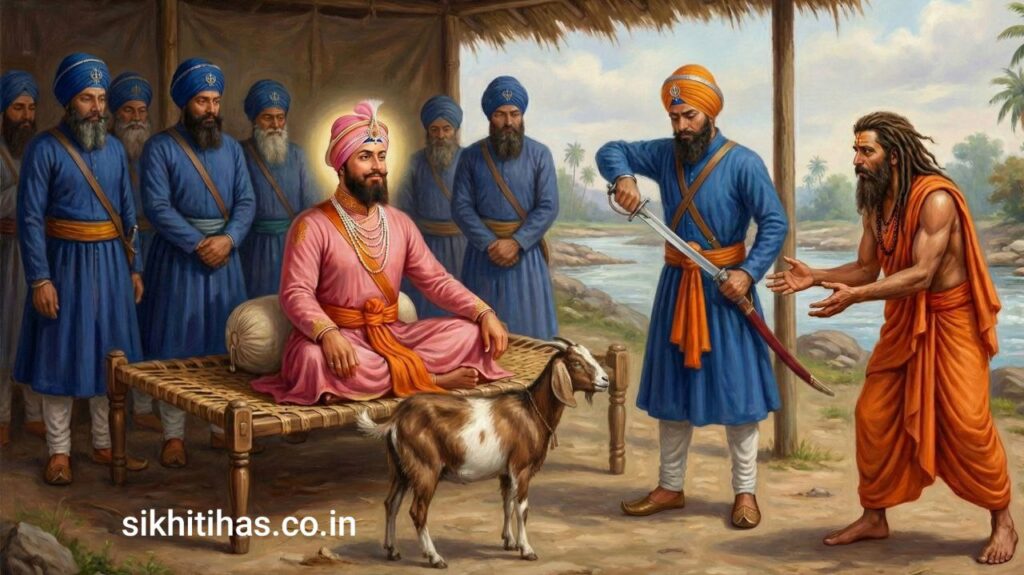
He eventually settled in Nanded, on the banks of the river Godavari, and became known as Madho Das Bairagi. Through years of intense meditation, he acquired various occult powers (riddhis and siddhis). He was known for his ego and used these powers to humiliate visiting saints and religious leaders by using a “miraculous cot” that he could manipulate to flip over.
The Historic Meeting with Guru Gobind Singh Ji
In 1708, Sri Guru Gobind Singh Ji reached Nanded and visited the hermitage of Madho Das. In an attempt to show off his powers, Madho Das tried to overturn the cot on which the Guru was sitting. Despite his best efforts and spiritual incantations, the cot remained unmoved. In fact, it is said the Guru’s spiritual weight made the cot sink into the ground.
From Ascetic to the Guru’s ‘Banda’
Recognizing the Guru’s immense spiritual aura, Madho Das’s ego vanished. He fell at the Guru’s feet and declared, “I am your ‘Banda’ (slave/servant).” The Guru then spoke to him about the atrocities being committed by the Mughal rulers in Punjab—the execution of the younger Sahibzadas and the suffering of the common people.
The Guru explained that while Madho Das was concerned about the life of a goat (referring to a meal being prepared), he was ignoring the rivers of blood of innocent humans being spilled in the north. This was the awakening Madho Das needed.
The Mission to Punjab
Madho Das was baptized into the Khalsa fold and given the name Gurbaksh Singh, though he became famously known as Banda Singh Bahadur. Guru Gobind Singh Ji gave him five arrows from his own quiver, a drum (Nagara), and a flag (Nishan Sahib) as symbols of authority. He was sent to Punjab with five chosen Sikhs to organize the Khalsa and put an end to the Mughal tyranny.
Legacy and Martyrdom
Baba Banda Singh Bahadur’s arrival in Punjab changed history. He led the Khalsa to victory in the Battle of Chappar Chiri, dismantled the oppressive zamindari system, and established the first Sikh Rule (Khalsa Raj). He eventually attained martyrdom in Delhi in 1716, remaining steadfast in his faith even under the most brutal tortures.
Conclusion
The story of Baba Banda Singh Bahadur reminds us that true power lies not in occult tricks, but in the service of humanity and the protection of the weak. His transformation remains a shining light for all who seek the Guru’s path.